Are you trying to choose between private cloud vs public cloud and feeling completely overwhelmed by conflicting advice?
Your CTO recommends a private cloud for better control and security. Your CFO pushes public cloud for lower upfront costs. A consultant suggests a hybrid cloud combining both. Meanwhile, you’re reading blog posts that contradict each other, watching vendor presentations that sound like sales pitches, and worrying that the wrong choice will cost your business thousands of dollars monthly.
The confusion makes perfect sense.
Every cloud provider claims their approach solves all problems. Sales teams promise unlimited scaling, ironclad security, and revolutionary cost savings. Articles compare technical specifications using jargon that assumes you already understand cloud infrastructure deeply.
Here’s the truth nobody wants to admit: neither option is universally better. Private cloud vs public cloud isn’t about choosing the winner; it’s about matching infrastructure to your specific business situation.
A growing startup needs an entirely different infrastructure than an established healthcare company. A seasonal retail business has different requirements than a financial services firm.
Let’s explore how to choose the most suitable cloud infrastructure for your business without wasting money on the wrong option.
What Private Cloud vs Public Cloud Means
Before comparing private cloud vs public cloud, let’s define these terms using simple language instead of technical specifications.
Public Cloud
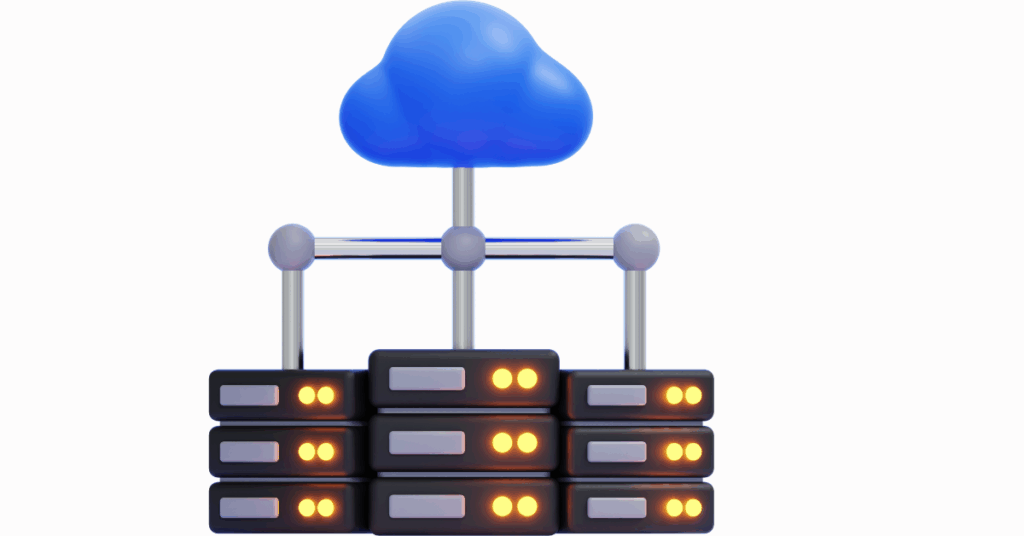
Imagine renting an apartment in a large building. You have complete privacy in your unit. Your neighbors can’t enter your space or access your belongings. However, you share the building’s elevator, parking garage, hallways, and utility systems with everyone else in the building.
Public cloud works exactly like this apartment scenario.
You rent computing resources from providers like AWS, Google Cloud, or CloudPap. Your applications, data, and virtual servers remain completely private and isolated. But you share the underlying physical infrastructure, servers, network equipment, and data centers with other customers.
This sharing model dramatically reduces costs.
The provider splits infrastructure expenses across thousands of customers instead of making you pay for everything alone. You get enterprise-grade data centers, redundant power systems, and professional management at a fraction of the cost of building these systems yourself.
Private Cloud
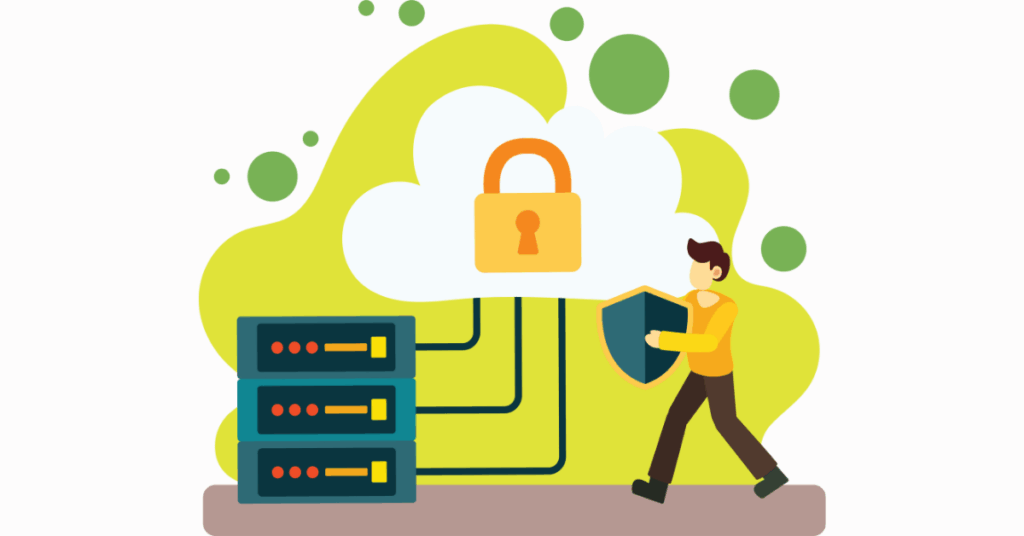
Now imagine owning an entire building for just your company. Nobody else accesses the property. You control security systems, maintenance schedules, building modifications, and every operational detail. This complete control costs more because you cover all expenses alone without splitting costs with other tenants.
Private cloud provides dedicated infrastructure exclusively for your business. The servers, storage systems, and networking equipment serve only your workloads. You might own this equipment in your own data center, or you might rent dedicated hardware from a provider who manages the physical equipment but reserves it entirely for you.
Public vs Private Cloud Differences
Public cloud charges are based on consumption. Use ten servers this month, pay for ten. Use a hundred servers next month, pay for a hundred. Your costs fluctuate directly with your usage.
Private cloud charges fixed capacity rates. You pay for allocated resources whether you use them fully or not. Ten servers or two servers running, same monthly bill because you’ve reserved the capacity.
Public cloud provisions resources instantly. Need a new database server? Deploy it in ninety seconds through a web interface: no waiting, no planning, no delays.
Private cloud requires capacity planning. Adding resources means purchasing hardware, installing equipment in racks, configuring networks, and testing systems. This process takes days or weeks instead of seconds.
The debate over private cloud vs public cloud centers on these fundamental trade-offs between flexibility and control, variable costs and predictable expenses, instant provisioning and planned capacity.
Private vs Public Cloud Cost Comparison
The most important factor in private cloud vs public cloud decisions is economics. Let’s examine real costs at different business scales.
Startup Phase: Public Cloud Wins Easily
Your new business launches with a minimal budget. You need professional infrastructure, but can’t afford $10,000 upfront for a private cloud setup.
Public cloud requires zero initial investment. Create an account, enter payment information, and deploy your first server. Start with $50 monthly spending. Scale to $200 as you gain customers. Grow to $500 when revenue increases.
Private cloud makes no sense at this stage. Setup costs exceed your entire annual cloud budget. The operational overhead of managing private infrastructure diverts focus from building your product and finding customers.
Growth Phase: Public Cloud Still Leads
Your business grows successfully. Monthly cloud spending reaches $1,500. You’re hiring employees, expanding features, and serving thousands of customers.
Public cloud continues serving you well. The pay-as-you-go model scales effortlessly with your growth. Deploy new environments for testing features. Spin up temporary servers for special projects—scale resources during marketing campaigns.
Private cloud becomes theoretically viable around $1,500 monthly spending, but rarely makes practical sense. Your team focuses on product development, not infrastructure management. The operational complexity of a private cloud would slow down everything you’re trying to accomplish.
The Breakeven Threshold
Research shows that businesses with stable workloads save 30-40% by switching from public to private cloud once monthly spending exceeds $2,500. This threshold represents the point where a private cloud’s fixed costs become cheaper than the public cloud’s consumption-based pricing.
Let’s calculate a real example. Your business spends $3,500 monthly on public cloud resources, servers, storage, bandwidth, and managed services.
Annual public cloud cost: $3,500 × 12 = $42,000
Equivalent private cloud setup:
- Initial setup and hardware: $10,000
- Monthly operating costs: $2,000
- First year total: $10,000 + ($2,000 × 12) = $34,000
You save $8,000 in year one despite the upfront investment. In year two, you save $18,000 because setup costs don’t repeat. The savings compound over time.
However, this calculation only works if your workloads remain stable. If your resource needs fluctuate dramatically, doubling some months and halving others, the public cloud’s flexibility continues to provide better value.
Enterprise Scale: Private or Hybrid Becomes Standard
Once monthly spending exceeds $10,000, private cloud vs public cloud decisions shift strongly toward private infrastructure or hybrid approaches.
The cost savings become too significant to ignore, and businesses develop sufficient technical teams to manage private infrastructure effectively.
Five Scenarios Where Public Cloud Wins
Understanding when to choose public cloud in the private cloud vs public cloud debate requires examining specific use cases.
Scenario 1: Unpredictable or Seasonal Traffic
E-commerce businesses experience massive traffic increases during Black Friday and holiday shopping. Normal traffic might be 10,000 daily visitors. Holiday traffic jumps to 100,000 daily visitors.
Public cloud handles this perfectly. Scale up server capacity in November and December. Pay for extra resources only during peak months. Scale back down in January when traffic normalizes.
Private cloud would require buying enough infrastructure to handle peak traffic, then watching it sit mostly idle for ten months yearly. The wasted capacity costs far more than the public cloud’s flexible pricing.
Tax preparation services, educational platforms with semester-based traffic, and event management companies all benefit from this flexibility. Pay for resources only when you need them.
Scenario 2: Development and Testing Environments
Software teams need temporary environments constantly. Testing new features requires spinning up databases, application servers, and testing infrastructure. These environments exist for days or weeks, then get deleted after completing tests.
Public cloud excels at this workflow. Developers create test environments in minutes. Run tests for three days. Delete everything when finished.
Cost: minimal because resources existed briefly.
Private cloud makes this expensive and slow. Provisioning test environments takes days. Deleting them doesn’t reduce costs because you’re paying for fixed capacity regardless. The inflexibility frustrates development teams and slows product velocity.
Scenario 3: Geographic Market Testing
You’re considering expanding to Europe but want to test market demand first. Deploy servers in European data centers temporarily. Run marketing campaigns for three months. Measure customer response and business metrics.
If the market responds positively, commit to long-term infrastructure. If the market disappoints, shut down European servers and try different regions. Public cloud lets you experiment without stranded infrastructure investments.
Scenario 4: Startup Companies Finding Product-Market Fit
Early-stage startups face massive uncertainty. Your product might need a complete redesign based on customer feedback. User numbers could grow 10x or shrink by half in three months.
The public cloud accommodates this uncertainty perfectly. Scale infrastructure up or down based on what you learn. Pivot products without worrying about stranded infrastructure investments. Focus your limited team on finding customers, not managing servers.
Private cloud locks you into capacity decisions before you understand your actual needs. This premature commitment wastes money and creates operational headaches.
Scenario 5: Disaster Recovery and Backup Systems
Many businesses run primary infrastructure on a private cloud but use a public cloud for disaster recovery. This hybrid approach provides cost-effective redundancy without doubling private infrastructure investment.
Store backup files in public cloud object storage. Maintain emergency failover servers that usually stay powered off. During disasters, spin up these backup systems quickly. Pay only when you need them.
Five Scenarios Where Private Cloud Wins
The private cloud vs public cloud comparison shifts dramatically for different business situations.
Scenario 1: Stable High-Traffic Applications
Your established SaaS platform serves 50,000 customers daily. Traffic patterns barely fluctuate; weekdays average 52,000 visitors, weekends average 48,000. You know exactly how many servers you need every single day.
This predictability makes the private cloud significantly cheaper. Public cloud charges premium prices for flexibility you never use. Private clouds’ fixed costs optimize for stable, consistent workloads.
Performance monitoring data shows private cloud delivers 99.95% uptime for stable workloads versus 99.8% for public cloud multi-tenant instances. The dedicated infrastructure eliminates variability from other customers’ workloads, affecting your performance.
Scenario 2: Compliance-Heavy Industries
Healthcare providers handling patient data face HIPAA regulations. Financial institutions process payments under PCI-DSS standards. Government contractors must meet FedRAMP requirements.
These compliance frameworks demand extensive security controls, detailed audit trails, and specific data handling procedures. Private cloud simplifies compliance by providing dedicated infrastructure with clear boundaries.
Public cloud technically supports compliance, but the shared responsibility model complicates audits. Compliance surveys reveal that 67% of heavily regulated businesses operate private or hybrid clouds compared to 23% of non-regulated companies. The regulatory burden drives infrastructure choices regardless of cost considerations.
Scenario 3: Performance-Critical Applications
Financial trading platforms measure latency in milliseconds. A five-millisecond delay costs millions in lost trading opportunities. These applications need guaranteed, consistent performance for every single transaction.
Gaming servers face similar demands. Players notice lag above 50 milliseconds. Lag ruins gameplay, drives users to competitors, and generates negative reviews that damage your business.
Public cloud instances share physical servers with other customers. During peak hours, neighboring workloads consume resources and increase your latency unpredictably. This variability kills applications where performance consistency determines success or failure.
Private cloud with dedicated hardware delivers predictable performance 24/7 without competition from other users.
Scenario 4: Large Database Workloads
Your business runs a 2TB database processing thousands of queries per second. This database needs high-memory servers (256GB+ RAM) with fast SSD storage and consistent I/O performance.
Public cloud offers these resources at premium prices. A single high-memory database server costs $1,500-2,500 monthly. Running multiple databases or adding replicas for redundancy multiplies these costs quickly.
Private cloud provides better economics for large, persistent databases. A $15,000 server purchase amortized over three years costs $417 monthly, 70% less than equivalent public cloud resources.
The consistent I/O performance matters too. Databases experience unpredictable slowdowns on public clouds when neighboring workloads create storage contention. Private cloud eliminates this variability.
Scenario 5: Legacy Systems with Specific Requirements
Your order processing system runs on software from 2008. It requires a specific operating system version no longer supported by modern cloud platforms. The software uses deprecated libraries that current systems don’t include. Licensing ties to specific hardware configurations.
Rewriting this legacy application to work with modern public cloud would cost hundreds of thousands in development time and risk introducing bugs in critical business systems.
Private cloud accommodates these legacy requirements. Configure dedicated servers to match old hardware specifications exactly. Install unsupported operating systems. Use deprecated software libraries. The legacy system continues running unchanged while you gradually modernize other infrastructure components.
The Hybrid Cloud Reality
Most businesses eventually discover that private cloud vs public cloud isn’t an either-or choice. Hybrid cloud strategies combining both models deliver optimal results.
Common Hybrid Architecture Patterns
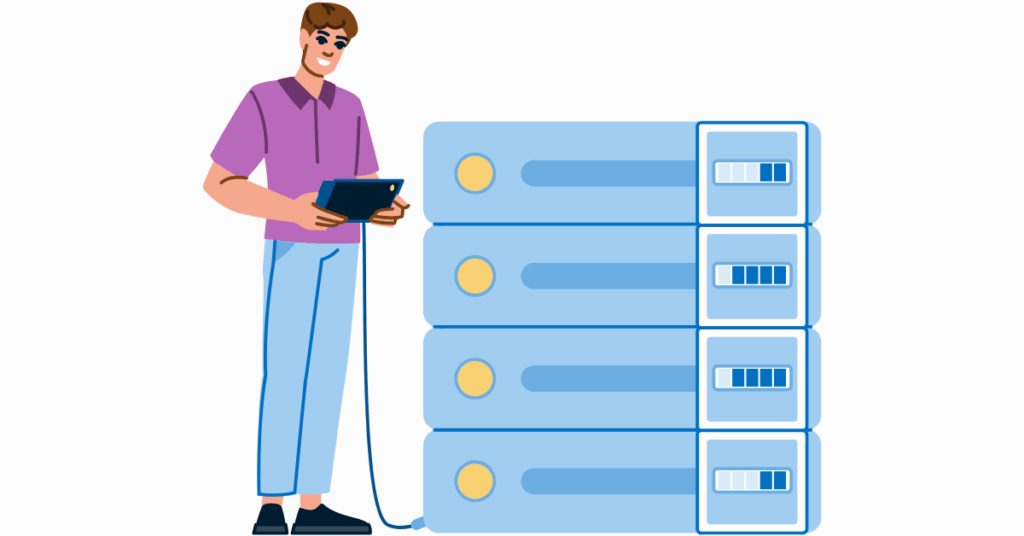
Smart businesses run stable core systems on private cloud while using public cloud for variable workloads. Your database servers, core application logic, and internal systems run on cost-effective private infrastructure. Your web servers, application frontends, and customer-facing services scale on the public cloud during traffic spikes.
This separation optimizes costs while maintaining flexibility. You’re not paying public cloud premium prices for stable workloads that never change. You’re not paying for idle private cloud capacity during low-traffic periods.
Another typical pattern separates environments by purpose. Production systems run on a private cloud for predictable costs and consistent performance. Development and testing environments run on a public cloud for rapid provisioning and temporary resources.
Geographic distribution creates natural hybrid opportunities. Your primary region runs on private cloud infrastructure. Secondary regions deploy on public cloud for faster market entry. Disaster recovery and backup systems leverage the public cloud’s pay-as-you-go economics.
CloudPap’s Unified Management
Managing a hybrid cloud used to require juggling multiple dashboards, APIs, and billing systems. CloudPap unifies both models through one platform.
Deploy public cloud instances starting at $3.99 monthly across 15+ global cities. Scale instantly as your traffic grows. When workloads stabilize, and spending reaches optimization thresholds, transition specific systems to dedicated private infrastructure—all managed through the same dashboard.
Start your business entirely on the public cloud. Evaluate costs and performance as you grow. Migrate high-traffic stable workloads to private infrastructure when economics favor it. Maintain flexibility where you need it while optimizing costs where you can.
How to Decide Between Public vs Private Cloud: A Practical Framework
Making smart private cloud vs public cloud decisions requires an honest assessment of your specific situation.
Question 1: What’s Your Monthly Spending?
Check your actual cloud bills for the past six months. Calculate average monthly spending.
Under $1,500 monthly: Stay with public cloud. Don’t even consider private cloud yet. The operational overhead exceeds potential savings.
$1,500-2,500 monthly: Monitor carefully and plan for future decisions. You’re approaching the transition threshold.
$2,500-5,000 monthly: Evaluate hybrid approaches seriously. Specific stable workloads likely benefit from private infrastructure.
Over $5,000 monthly: Private or hybrid cloud should be your default unless you have specific reasons for staying entirely public.
Question 2: How Predictable Are Your Workloads?
Examine your resource usage patterns over six months. Does usage fluctuate dramatically or remain relatively stable?
Highly variable (triple usage some months): Public cloud’s flexibility provides more value than cost optimization. Stay public regardless of spending levels.
Moderate variation (50% fluctuation): Hybrid approaches work well. Move stable baseline workloads to private cloud, handle spikes with public cloud.
Stable (under 20% variation): Private cloud optimizes costs significantly. Your consistent usage means you’re paying for flexibility you never use.
Question 3: What’s Your Team Capacity?
Count your infrastructure and operations staff honestly.
0-2 engineers: You need a public cloud. Private infrastructure management would overwhelm your small team and distract it from business goals.
3-5 engineers: Hybrid cloud becomes manageable. Assign 1-2 engineers to infrastructure while others focus on applications.
6+ engineers: Private cloud is fully manageable. Dedicate staff to infrastructure without sacrificing application development velocity.
Cloud management research indicates businesses need a minimum of 2-3 dedicated infrastructure engineers to operate a private cloud successfully. Don’t underestimate this requirement.
Question 4: Do Regulations Affect You?
Review your compliance obligations honestly.
No regulations: Choose based purely on economics and operational preferences.
Moderate compliance (PCI-DSS, SOC 2): Hybrid approaches usually satisfy requirements while optimizing costs.
Strict compliance (HIPAA, FedRAMP, data sovereignty): Private cloud often becomes mandatory regardless of cost considerations.
Question 5: What’s Your Growth Stage?
Consider where your business sits in its lifecycle.
Early startup testing ideas: Public cloud flexibility is essential. Don’t prematurely commit to infrastructure.
Growth stage with increasing revenue: Start evaluating transition options as spending grows.
Established business with stable operations: A Private or hybrid cloud optimizes your operations and costs.
Making Your Decision and Taking Action
You now understand the key factors in private cloud vs public cloud decisions. The choice depends on your spending levels, workload patterns, team capacity, compliance requirements, and business stage.
Follow a natural progression.
Start with public cloud for its low initial costs, flexibility, and operational simplicity. Focus entirely on building products and finding customers without worrying about infrastructure.
Monitor your spending monthly as you grow.
When spending approaches $2,000-2,500 monthly, begin evaluating alternatives. Analyze which workloads remain stable versus which fluctuate unpredictably.
Once spending exceeds $2,500 monthly consistently and workloads stabilize, transition stable systems to private infrastructure. Maintain a public cloud for development environments, geographic expansion, and traffic spikes.
Continue optimizing over time.
Financial analysis shows that the private cloud becomes 35% cheaper than the public cloud for workloads exceeding 70% capacity utilization consistently. These savings compound year after year.
Don’t make decisions based on what seems sophisticated or what competitors claim. Make choices based on your actual numbers and requirements.
- Calculate your costs honestly.
- Evaluate your workload patterns realistically.
- Assess your team capacity accurately.
Ready to deploy cloud infrastructure optimized for your specific needs?
CloudPap supports your entire cloud journey, public instances starting at $3.99 monthly, private infrastructure options, and unified management across 15+ global cities.
Start with what makes sense for your current business stage. Scale to what you need as you grow. Optimize costs when workloads stabilize. Build on infrastructure that adapts to your business rather than forcing your business to adapt to infrastructure limitations.
Deploy the right cloud model for today while maintaining flexibility to evolve tomorrow.